ADAS calibration and diagnostics
Your safety systems only work if they are aimed correctly.
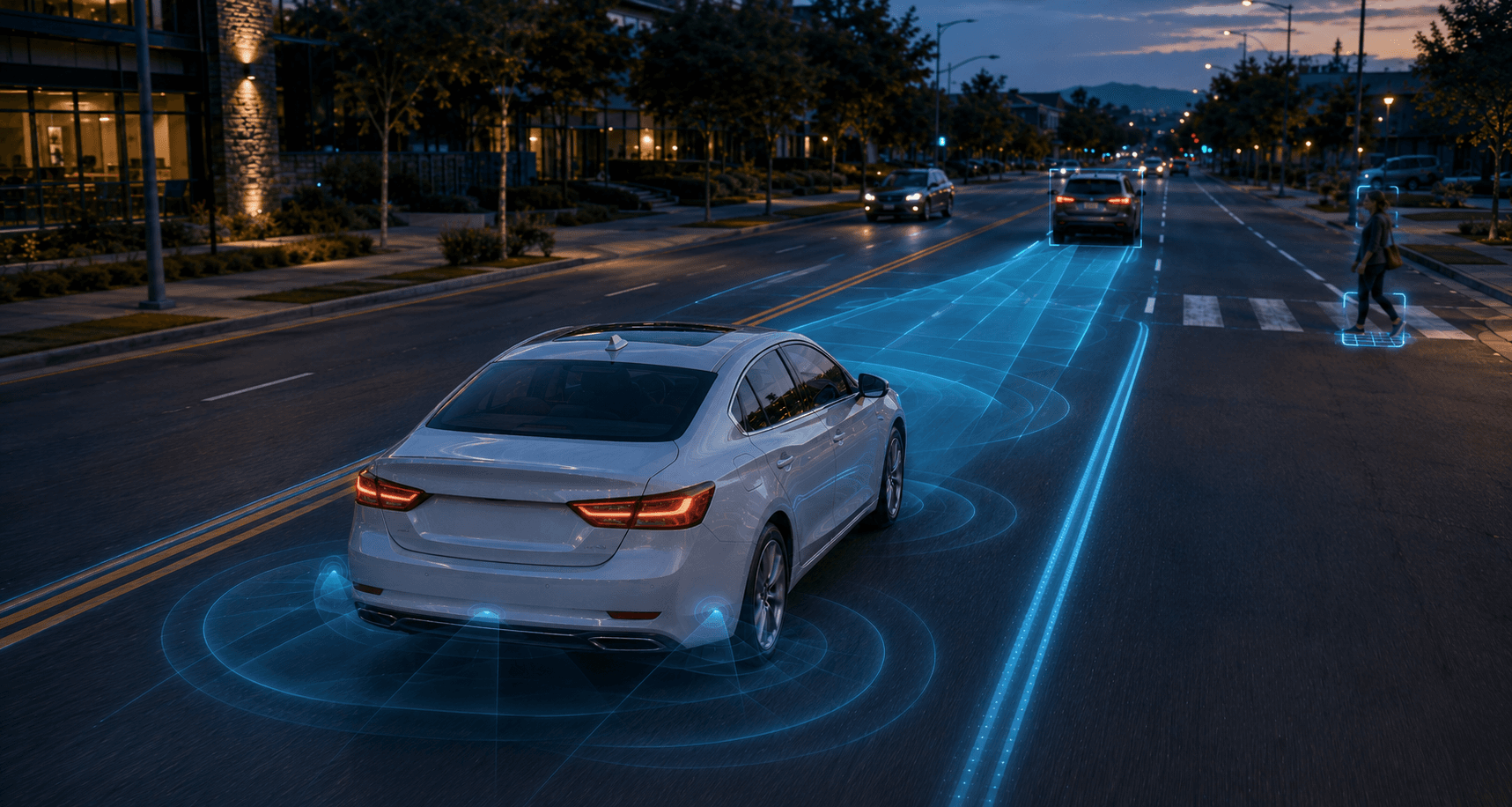
Cameras, radar and lidar have to be calibrated to manufacturer specification after a windshield replacement, a collision repair, an alignment, or any suspension work. We calibrate them in a controlled facility, verify the result, and document it.
Prefer to talk it through? Call (555) 018-2200
- Full pre-scan and post-scan on every job
- Manufacturer procedure for your exact VIN
- Written report for you, your shop or your insurer
Start here
Do you actually need a calibration?
Find what was done to your vehicle. If it appears below, the driver assistance systems have to be checked and almost certainly recalibrated — whether or not a warning light has come on.
A system can be well out of specification and still look completely normal on the dash. Most manufacturers require calibration by procedure, not by symptom.
Glass and body work
- Windshield replacement or repair on a camera-equipped vehicle
- Any collision repair, however minor
- Bumper, grille or mirror removal and refitting
- Airbag deployment
Suspension and ride height
- Wheel alignment or any suspension work
- Ride height changes, including new springs
- Larger or different-size tires
- Steering angle sensor replacement or reset
Sensors and modules
- Camera, radar or sensor replacement
- Body control or ADAS module replacement
- A dash warning light for lane keeping, cruise or collision warning
- A system that switches itself off while driving
Not sure which applies? Send us the glass invoice or the collision estimate and we will tell you what the vehicle needs — before you book anything.
The basics
What ADAS actually covers
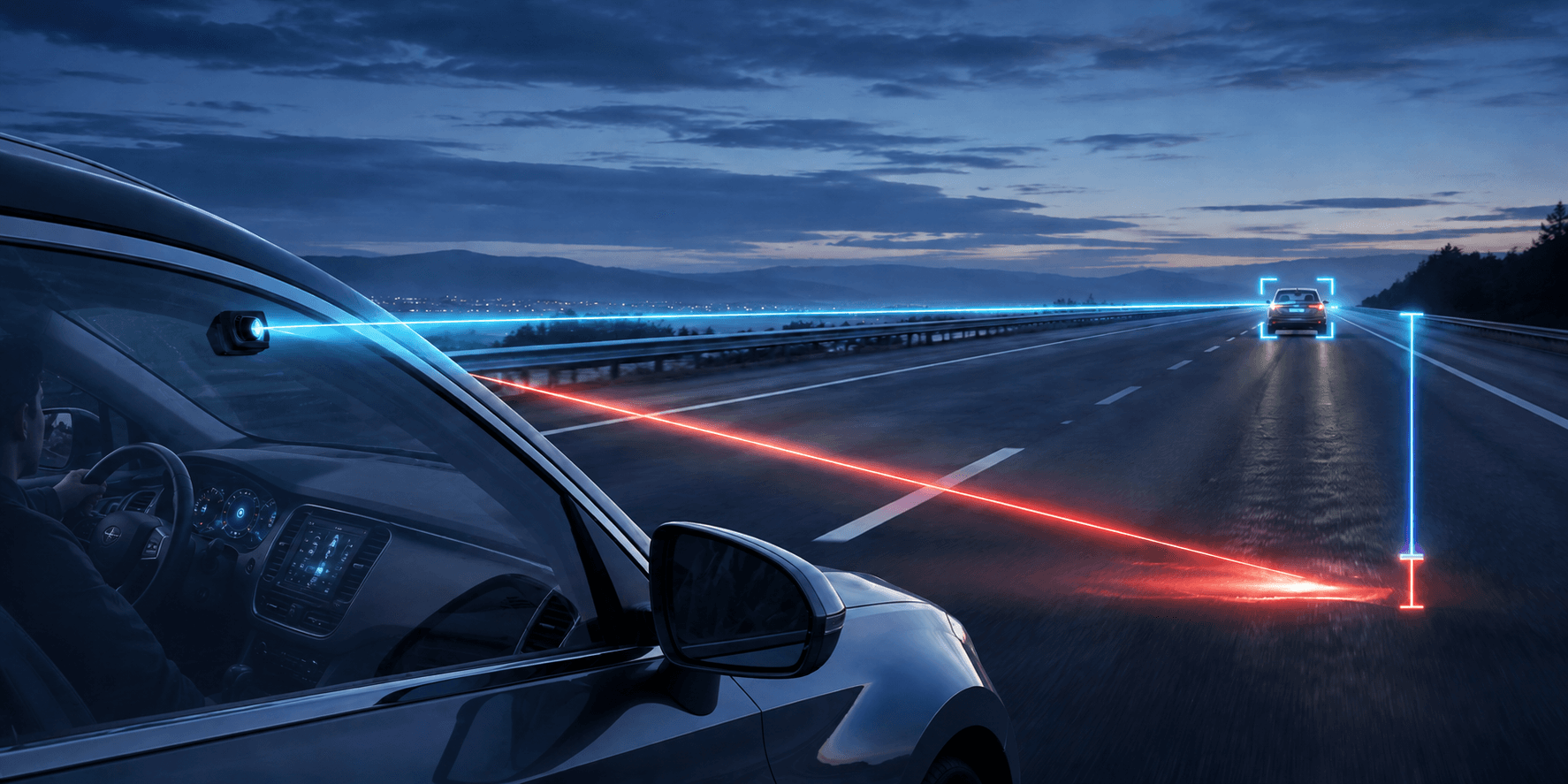
Advanced Driver Assistance Systems are the sensors and software that watch the road for the driver. They depend on knowing precisely where each sensor is pointing - a camera aimed a fraction of a degree off can misjudge distance by meters at highway speed.
Systems that depend on calibration
- Automatic emergency braking
- Lane departure warning and lane keeping assist
- Adaptive cruise control
- Blind spot monitoring
- Rear cross-traffic alert
- Parking assistance and surround view
- Adaptive headlights
- Driver attention monitoring
Why aim matters
Half a degree at the windshield is a meter down the road
In the bay
Five steps, in this order, every time
Aiming a camera is the part people picture, but it is step three of five. Skip the steps around it and you get a calibration that clears the dash light without being correct.
Step 01
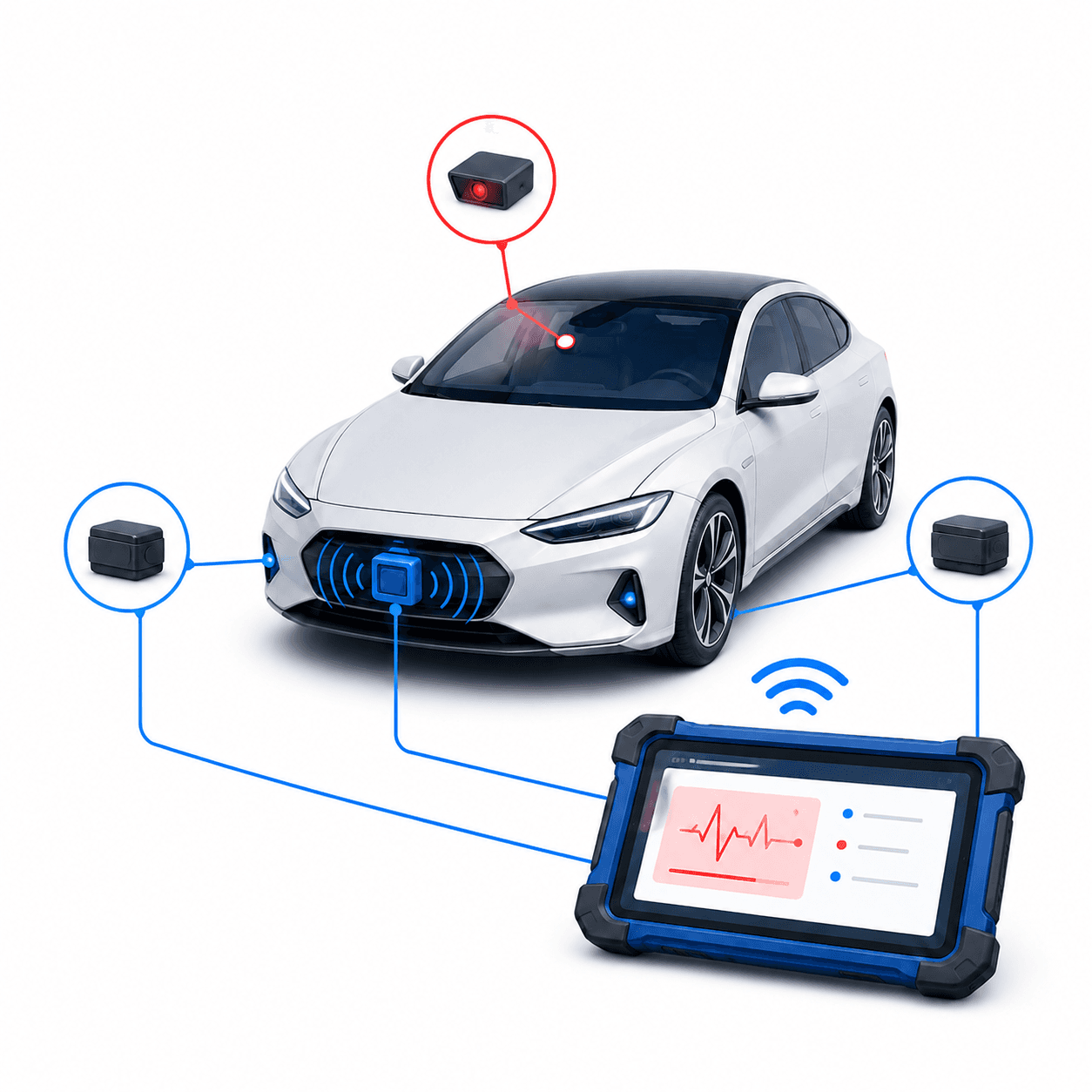
Diagnose
A pre-scan of every module on the vehicle, so we know what was already faulty before we touched anything.
Step 02
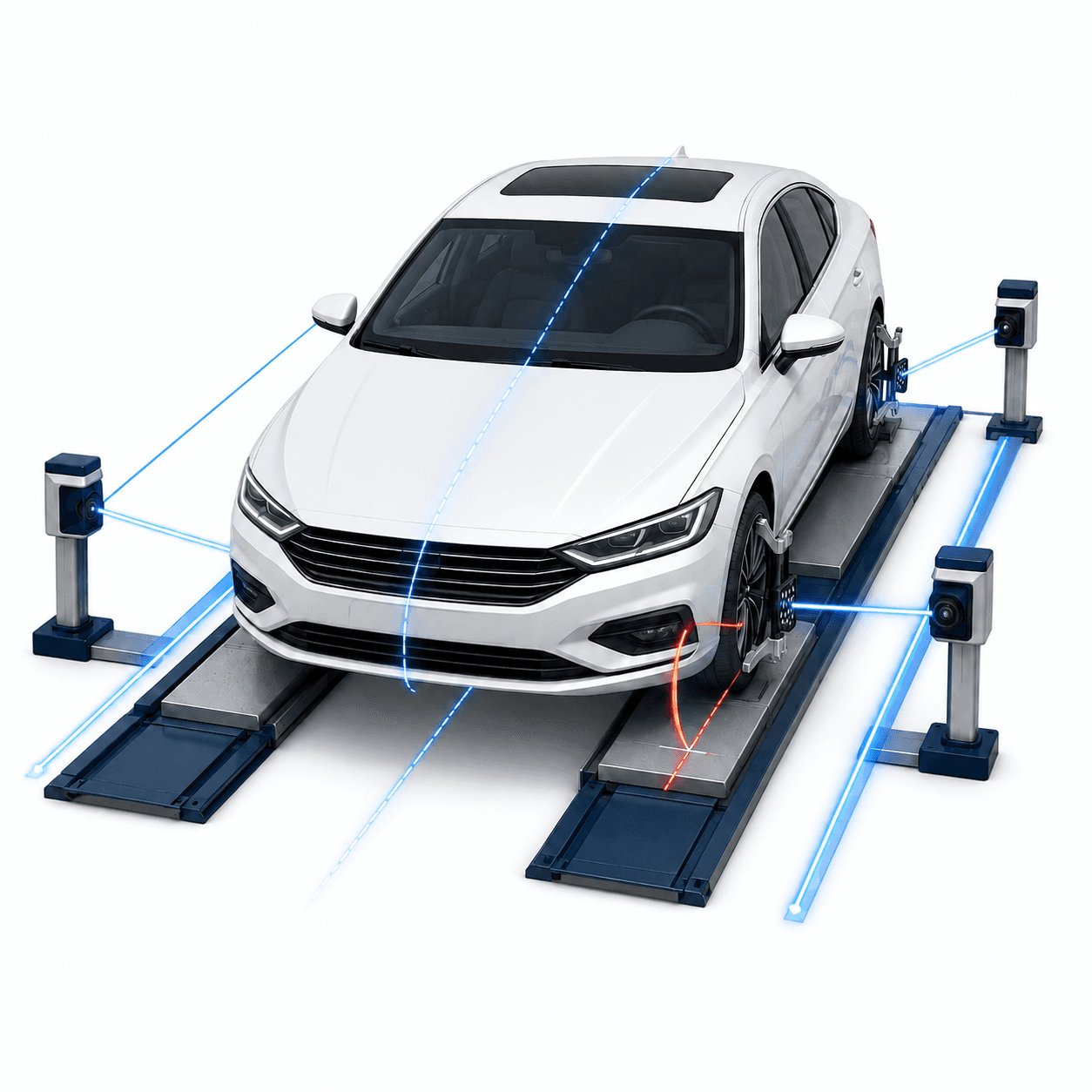
Check the alignment
Cameras and radar are aimed relative to the thrust line. If the alignment is out, the calibration is out with it.
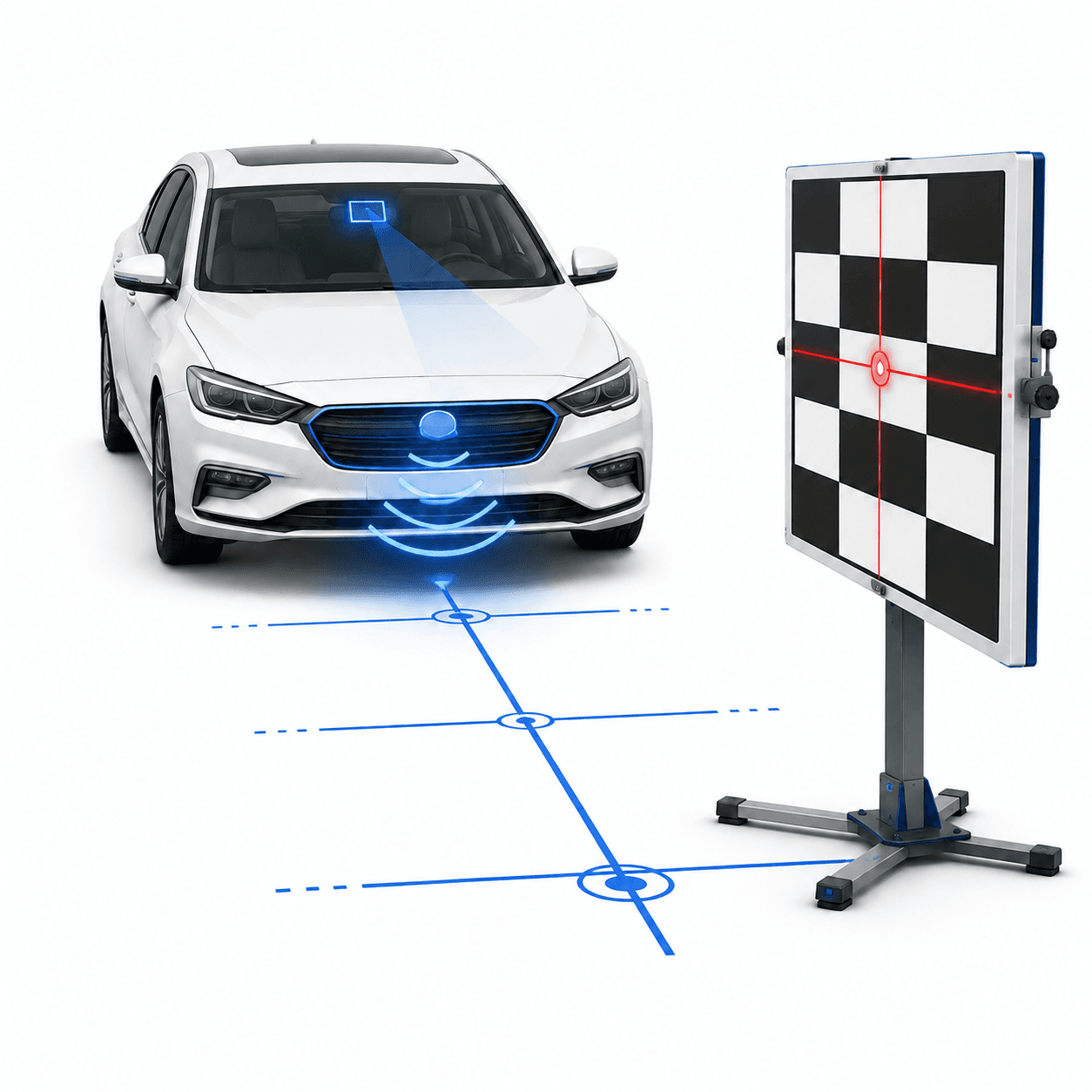
Step 03
Calibrate
Static targets at measured distances, a road procedure, or both — whatever the manufacturer specifies for that vehicle.
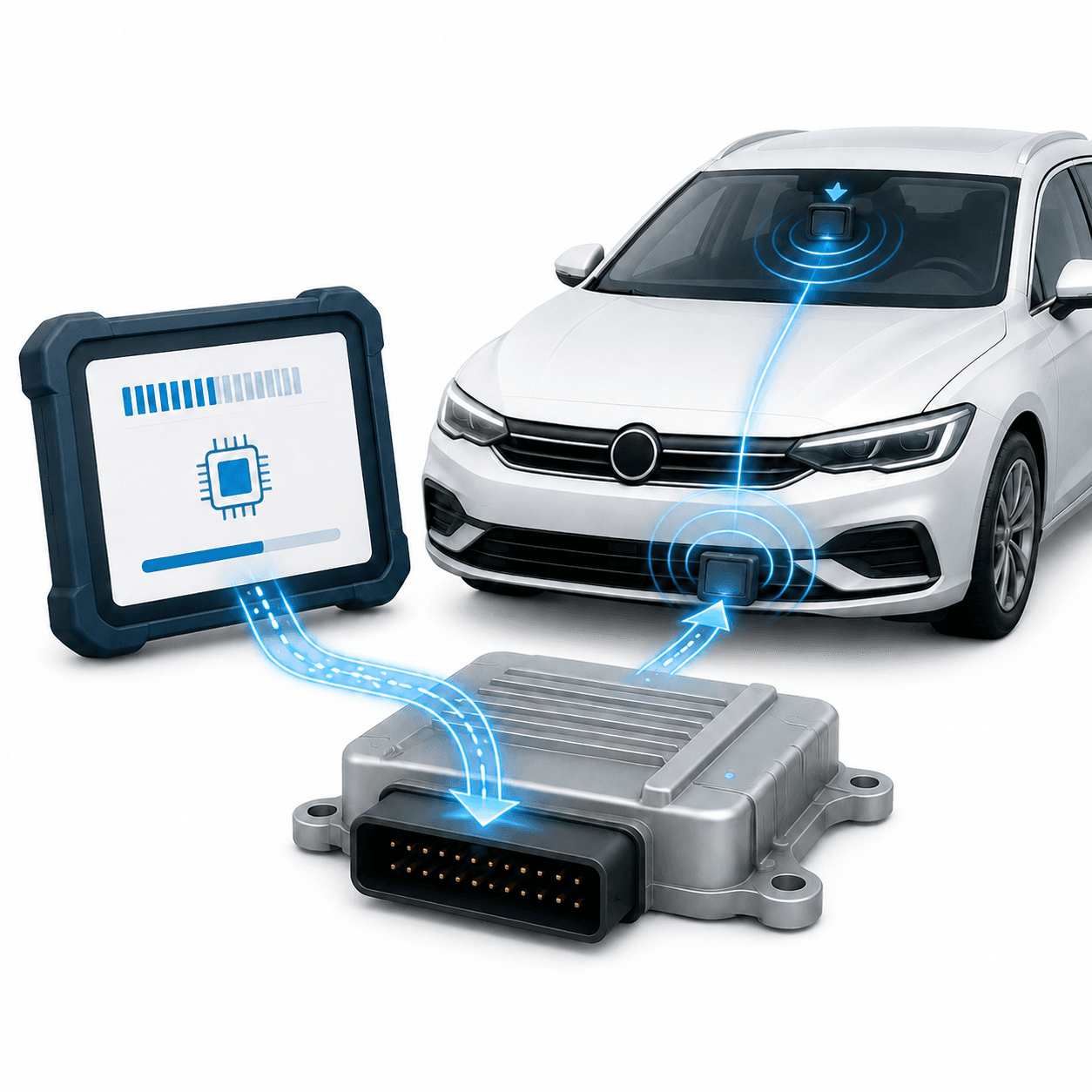
Step 04
Program
VIN-specific programming and initialization, so a replaced camera or radar behaves exactly as the original did.
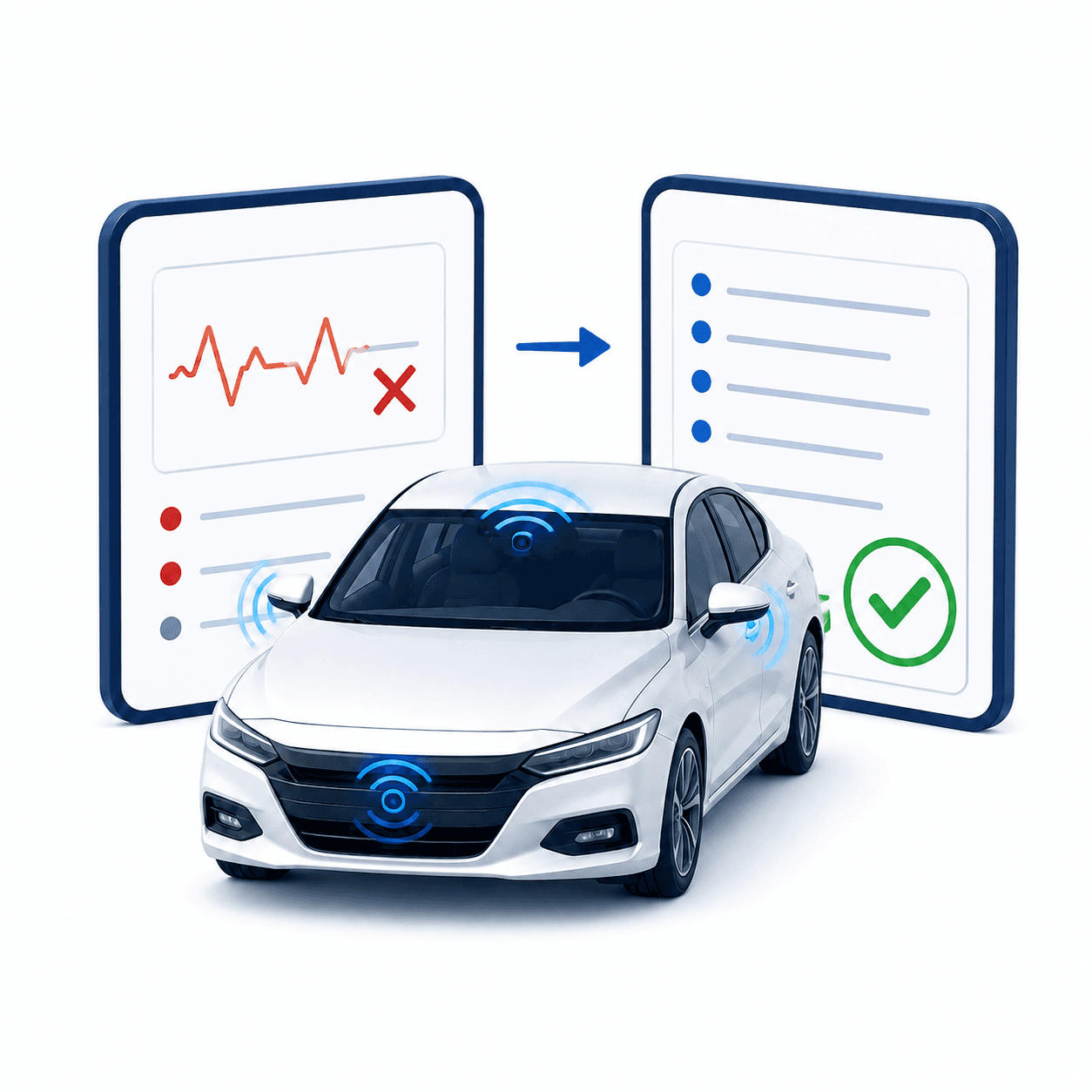
Step 05
Verify and document
A second full scan confirms the systems pass, and you leave with the before-and-after record.
A calibration that will not complete is information, not a dead end — it usually points at a bent bracket, a prior repair or a faulty sensor. You get what we found and what it would take to put right, before you are charged for work that cannot succeed.
See the full serviceBook online
Pick a service and choose your time
Live availability, instant confirmation. Durations are the time reserved in the bay — if a vehicle turns out to need more, we tell you before we start.
ADAS calibration
2 hrsStatic and dynamic calibration of cameras, radar and sensors.
Post-windshield calibration
1 hr 30 minCamera recalibration after glass replacement.
Diagnostics and programming
1 hrFull-system scan, fault diagnosis and VIN-specific programming.
Multi-system calibration
4 hrsSeveral systems calibrated in one visit - allow half a day.
Why it matters where you go
Calibration is a precision job, not a box to tick
A purpose-built bay
Calibration needs level floor, known lighting, and clear space around the vehicle for targets. A general shop floor is not a substitute.
Manufacturer procedures
We work from current OEM service information for the specific VIN, not a generic routine.
Documented results
Every job ends with a before-and-after scan report. If a system cannot be brought into specification, we tell you why.
Straight answers
If a vehicle does not need calibration, we will say so. If it needs alignment first, we will tell you that too.
Ready to get your safety systems verified?
Book online in under two minutes, or call and we will talk it through.